Margot and Josh’s final breakup
P.S. I Still Love YouMargot and Josh’s final breakup turns a sisterly push toward reconciliation into a recognition of lasting separation. Margot goes to speak with Josh before returning to Scotland, but the conversation does not bring them back together. Instead, it leaves her grieving both the romance and the friendship they shared, while prompting Lara Jean to reconsider how certain love can ever be.
The Push to Talk
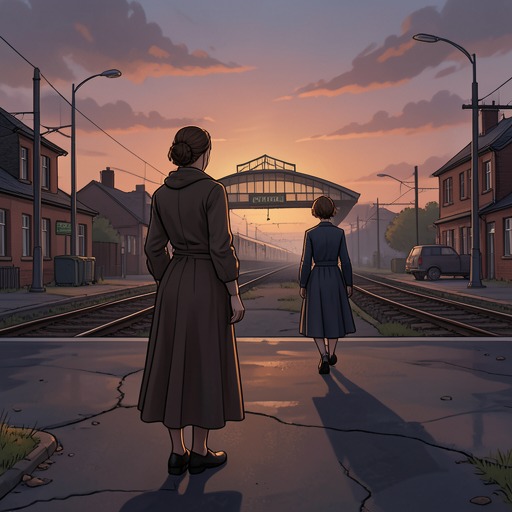
Margot’s conversation with Josh begins with Lara Jean’s encouragement. When Lara Jean hesitates over how to deliver a letter to Peter, Margot advises her to stop planning and speak to him directly. Kitty then urges Lara Jean to get Peter back, and Margot adds, “Don’t let it be too late.” Lara Jean understands that the warning applies not only to her and Peter but also to Margot and Josh. With Margot due to leave for Scotland again in less than a week, Lara Jean fears that silence will harden into a permanent estrangement. She urges Margot to talk to Josh before leaving, reasoning that her own friendship with Josh might mend because they are neighbors, while distance could leave Margot and Josh feeling like strangers.
That advice leads to a conversation whose outcome Lara Jean cannot control. When Lara Jean returns home, Kitty tells her that Margot went to Josh’s and that “it wasn’t good.” Lara Jean had hoped the talk would lead to the same kind of reunion she expected with Peter and herself. Instead, she is sent to check on her sister, confronting the immediate cost of the advice she had given.
The Conversation’s Aftermath
Lara Jean tries to care for Margot through small, familiar gestures. She makes Night-Night tea with two tablespoons of honey, recalling how their mother used to prepare it for them at bedtime, and sends Kitty upstairs with the mug. She also brings Margot buttered cinnamon toast. When she finds her sister curled on her side and crying, Lara Jean lies beside her, presses her forehead to Margot’s back, and scratches her shoulder blades as Margot likes. The closeness of the scene makes the change in their family’s emotional balance palpable: Margot rarely cries, and Lara Jean says that seeing her cry sets the house off its axis.
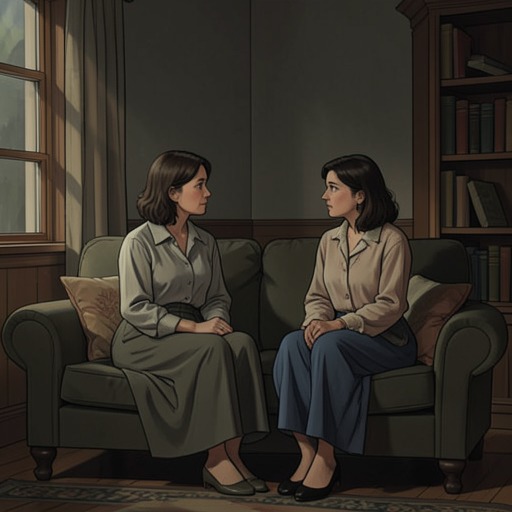
Margot tells Lara Jean that the relationship is over for good. She had thought that if she wanted to get back together, Josh would want the same, but he does not. His stated reason is that a long-distance relationship is too hard, and he agrees with Margot’s original decision to break up. Margot had missed him intensely; now she feels that he did not miss her at all. Lara Jean counters with what she saw during French class: Josh alone outside on the bleachers, eating lunch. She remembers him as having missed Margot badly, even if that evidence cannot change his decision now.
The breakup also makes Margot name her feelings more plainly than before. She admits, “I think . . . I think I just still really love him.” Lara Jean notices the word love: she recalls hearing Margot say that she was in love, but not that she loved Josh. Margot’s grief is sharpened by the contradiction between the person she meant to be and the person she finds herself becoming. She had ended the relationship so she would not be “that girl crying over her boyfriend”; now she feels she has become exactly that.
What the Breakup Ends
Later, Margot jokes with Lara Jean about dating men from Scotland, England, Ireland, and Wales when she returns to school to study anthropology. The levity does not undo the loss she describes: she believes she and Josh will never again be friends as they were before. He had been her best friend, and that part of their relationship, in her view, is over too. Lara Jean jokes that she thought she was Margot’s best friend; Margot answers that Lara Jean is her sister, and that means more. The exchange offers comfort without pretending that one bond can simply replace another.
For Lara Jean, the finality connects to her own history with Genevieve: some friendships belong to an earlier version of life and cannot be preserved just because they once mattered. She recognizes Margot and Josh’s separation as the end of an era. This time, the ending feels real because Margot is crying and because both sisters understand that things have changed. The scene thus marks more than a failed attempt at reunion: it records the point at which the possibility of returning to the old relationship gives way to the knowledge that it has ended.
A Warning About Love
Margot turns her loss into a warning for Lara Jean. She tells her not to become so serious that nothing can go back to how it was, and urges her to be careful with her heart even as she loves Peter. Her warning rests on the breakup’s central reversal: what once seemed enduring can change, and people can leave without intending to. Margot concludes that nothing is guaranteed. Lara Jean promises to be careful, but admits to herself that she does not know what that means when she already likes Peter so much.
The breakup therefore closes Margot and Josh’s chance of returning to their former closeness while complicating Lara Jean’s hope for a lasting romance. Margot’s counsel does not offer a method for preventing heartbreak; the evidence of her own experience makes certainty impossible. What she can offer is the knowledge that love and separation may coexist, and that a relationship’s end can alter not only a couple’s future but the shape of a friendship and a family’s sense of what comes next.